

Walk into most flight schools in South Florida and you will find Cessna 172s with instrument panels that have not changed meaningfully since the 1970s. Six analog dials, vacuum-driven gyros, a basic GPS bolted somewhere to the right. That is what a steam gauge cockpit looks like. It is also what the argument for "start on steam gauges to learn the fundamentals" is built around.
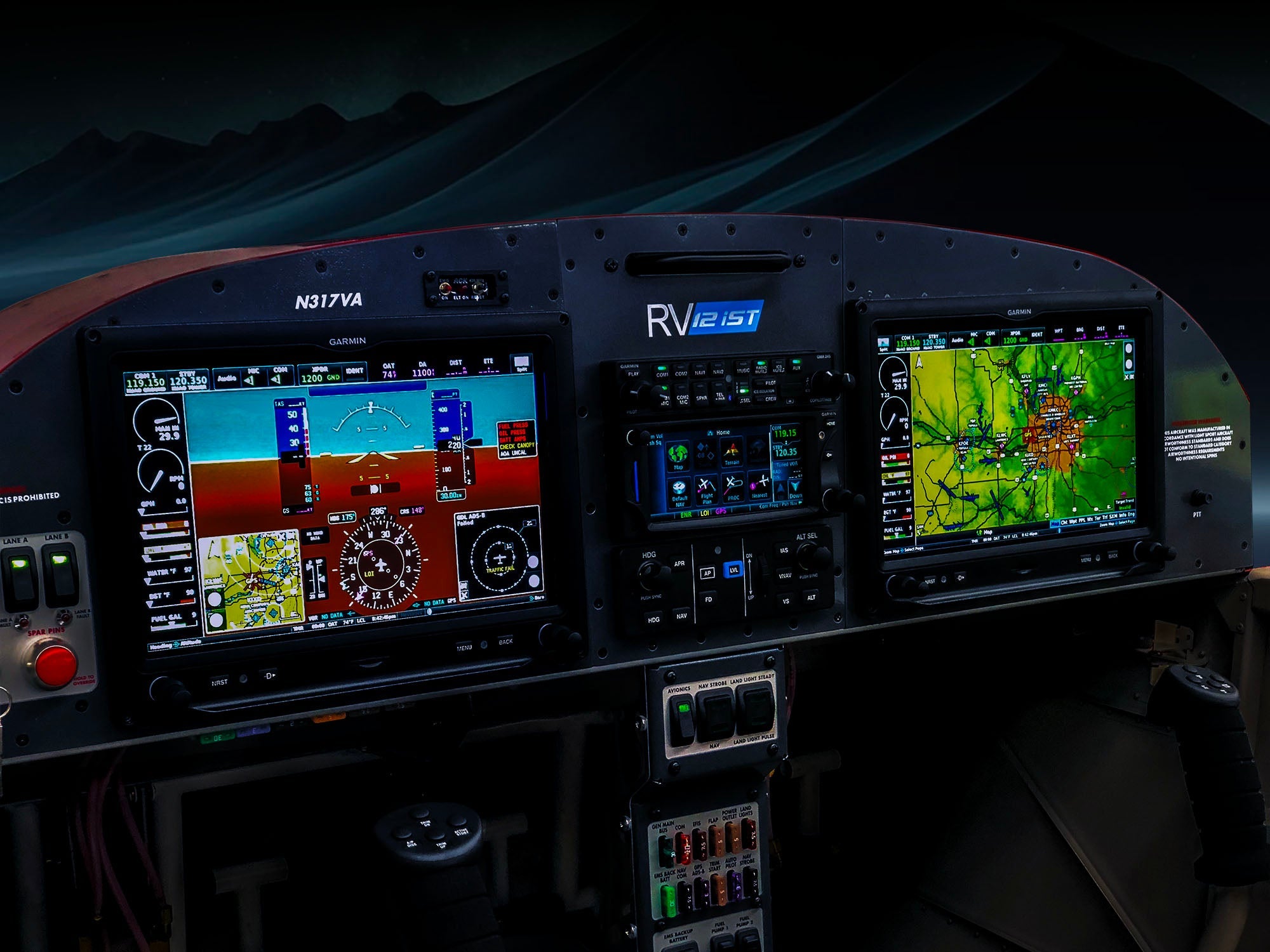
Dynasty Aviation trains exclusively in modern glass-cockpit aircraft: the Sling LSA, Van's RV-12 iS, and Tecnam P2006T, all equipped with Garmin G3X avionics. This is a deliberate choice, not a selling point. Here is the actual reasoning behind it and why it matters for your development as a pilot.
What "Glass Cockpit" and "Steam Gauge" Actually Mean
Steam gauges are traditional analog instruments. Each instrument is a separate mechanical or vacuum-driven device: airspeed indicator, attitude indicator, altimeter, turn coordinator, heading indicator, vertical speed indicator. The classic "six-pack" arrangement. Data is presented as needle position on a dial. Each instrument works independently.
Glass cockpit refers to digital avionics systems where flight information is presented on electronic displays rather than analog dials. A Primary Flight Display (PFD) consolidates what used to be six separate instruments into one integrated screen. A Multi-Function Display (MFD) adds moving maps, traffic, terrain, engine data, and flight planning in a single interface. The Garmin G3X system in Dynasty Aviation's fleet is a purpose-built example of this: modern, reliable, and representative of what professional aviation looks like today.
The difference is not just aesthetic. It changes how information is presented, how situational awareness is built, and what skills transfer to advanced ratings and professional operations.
The Case for Steam Gauges: What Proponents Argue
The traditional argument for training on steam gauges goes like this: analog instruments force students to develop stronger fundamental scanning habits, build a deeper intuitive feel for aircraft performance, and avoid over-reliance on automation. When a student must manually interpret each instrument individually and synthesize that information into a picture of the flight, the argument is that they develop a more grounded understanding of what the aircraft is doing.
There is something to this. Analog instruments do present data in a way that shows trends visually through needle movement, which some pilots find intuitive. A vacuum-driven attitude indicator needle sweeping toward a bank gives an immediate sense of rate that some pilots feel is clearer than a digital tape.
This argument was more compelling in 1995, when glass cockpits were new, expensive, and only found in jets. In 2026, it does not reflect the reality of where flight training, aircraft manufacturing, or professional aviation is heading.
The Case for Glass Cockpit Training: The Professional Reality
Every commercial airliner flying today has a glass cockpit. Every modern business jet has a glass cockpit. The vast majority of new general aviation aircraft being manufactured are equipped with glass avionics. The Garmin G1000, G3X, and Avidyne Entegra systems are standard, not premium, in new production aircraft.
When a pilot trained exclusively on steam gauges steps into a glass cockpit for the first time, there is a transition period. Some pilots adjust quickly. Others struggle. The scan patterns are different, the data presentation is different, and the integration of navigation, traffic, and terrain data into the primary flight display requires new habits.
When a pilot trained on glass steps into a steam gauge aircraft, the transition is also required, but the direction of travel matters. Professional aviation is moving toward glass, not away from it. The transition you will never need to make is from glass to glass. The transition you may need to make, flying a rental or an older aircraft, from glass to steam, is simpler because the underlying flight skills are identical. Only the display format changes.
Here is what training on glass cockpit avionics from the start actually delivers:
Integrated situational awareness from lesson one. A Garmin G3X PFD presents airspeed, altitude, attitude, heading, vertical speed, and navigation data in a single, synthesized display. Students learn to scan a unified picture rather than building that picture manually from six separate instruments. This is exactly how airline and corporate cockpit crews work.
Self-monitoring avionics. Glass systems monitor themselves for failures and alert the pilot. A failing component generates a warning. Steam gauge systems, particularly vacuum-driven gyros, can fail gradually and silently. A failing vacuum pump can cause an attitude indicator to slowly become unreliable without any direct indication to the pilot, a historically significant cause of spatial disorientation accidents.
Moving map navigation integrated into training from the start. Students learn to use GPS navigation, flight planning, and airspace awareness as core skills, not add-ons. By the time they reach instrument training, those skills are habitual.
Direct relevance to advanced ratings. Instrument Rating training involves ILS approaches, GPS procedures, and ATC-integrated navigation that is far more intuitive in a glass cockpit than on steam. Dynasty Aviation students entering instrument training have already been reading PFD presentations for months.
Career relevance. For any student with professional aviation aspirations, glass cockpit proficiency is not optional. It is expected at every airline interview and professional pilot evaluation. Starting your training in glass cockpits means you arrive at your airline interview without a gap.
The Garmin G3X: What Dynasty Aviation Students Actually Fly
The Garmin G3X is the avionics suite installed in Dynasty Aviation's training fleet. It is designed specifically for Light Sport and experimental aircraft and is widely regarded as one of the most capable and intuitive glass cockpit systems available in that aircraft category.
Key features students interact with from the first flight:
Primary Flight Display: Attitude, airspeed tape, altitude tape, vertical speed, heading, and slip indicator are all consolidated on a single large screen with clear presentation. Standard instrument scan translates directly from classroom to cockpit.
Multi-Function Display: Moving map with airspace overlays, traffic, terrain awareness, weather, and flight planning. Students develop airspace awareness and navigation habits that carry through every subsequent rating.
Engine monitoring: Full engine data integrated into the display, including fuel flow, CHT, EGT, and oil pressure. Students learn to monitor engine health as part of normal cockpit discipline from the earliest lessons.
Autopilot integration: The G3X interfaces with autopilot systems in equipped aircraft, giving advanced students exposure to automated flight management that mirrors professional operations.
This is not the same as training on a Garmin G1000 in a Cessna 172, which is a common glass cockpit option at many schools. The G3X in a light sport aircraft gives students an equivalent situational awareness and avionics experience at lower operating cost, which translates to lower hourly training rates.
Does Glass Cockpit Training Cost More?
The honest answer is: it depends on the school and the aircraft, and the hourly rate difference is smaller than most people assume when you factor in total training cost.
Schools operating older steam gauge aircraft often quote lower hourly rates. But older aircraft have higher maintenance demands and more frequent unscheduled groundings, which extend timelines and add hours. Dynasty Aviation's in-house maintenance program and modern fleet keep aircraft available consistently, which protects training momentum and helps students reach their certificates closer to the FAA minimum hour requirements.
The total cost of training is not just the hourly rate multiplied by the hours. It is the hourly rate multiplied by the hours actually needed to reach checkride readiness. Consistent aircraft availability and efficient skill building in a modern training environment often produce better total cost outcomes than lower hourly rates in older, less reliable aircraft.
Which Should You Choose?
If your goal is a career in professional aviation, train in a glass cockpit. Every aircraft you will ever fly professionally will have one. The fundamentals of flight, pitch control, power management, traffic scanning, aeronautical decision-making, are the same regardless of instrument type. The avionics proficiency you build on glass does not need to be rebuilt later.
If your goal is recreational flying and you genuinely prefer the analog presentation of steam gauges, that is a legitimate preference. Some pilots simply find needle-and-dial instrumentation more intuitive, and for purely recreational flying at familiar airports, that preference is reasonable.
For students in South Florida considering a career path, Dynasty Aviation's glass cockpit fleet is the right training environment. The Private Pilot program, Instrument Rating, Commercial training, and Elite Cadet airline pathway all build on the glass cockpit proficiency established from the first lesson.
A discovery flight at North Perry Airport is the best way to experience the difference firsthand. You will fly a Garmin G3X-equipped aircraft over Fort Lauderdale and Miami airspace with a certified instructor and see exactly what modern glass cockpit training looks like from the pilot's seat.
Frequently Asked Questions
Will I be able to fly steam gauge aircraft after training on glass? Yes. The flight skills are identical. The scan patterns and instrument interpretation require a short adjustment period, but pilots who are proficient in glass cockpits adapt to steam gauges without difficulty. The reverse transition, steam to glass, is typically more challenging and takes longer.
Do I need to know how to use steam gauges to pass the FAA written test or checkride? The FAA written knowledge test and checkride evaluate aeronautical knowledge and flying proficiency to the Airman Certification Standards. They do not require you to have trained on steam gauges specifically. Instrument interpretation is instrument interpretation regardless of the platform.
What happens if the glass cockpit fails? Glass cockpit aircraft are required by FAA regulations to have backup instruments. Dynasty Aviation's aircraft carry backup analog instruments to cover primary display failures. Additionally, glass systems include self-monitoring software that alerts pilots to component failures before they become critical, a meaningful safety advantage over steam gauge aircraft where certain failures, particularly vacuum pump failures driving the attitude indicator, can occur silently.
Is the Garmin G3X the same as the G1000? They are different products from the same manufacturer. The G1000 is Garmin's larger integrated flight deck system found in Cessna 172S, Diamond DA40, and similar production aircraft. The G3X is designed for light sport and experimental aircraft and is installed in Dynasty Aviation's Sling and RV-12 fleet. Both are glass cockpit systems with similar data presentation philosophies. Proficiency in either transfers readily to the other.
Book a Discovery Flight | View the Aircraft Fleet | See All Programs | Contact Us
Dynasty Aviation is an FAA Part 141 approved flight school based at North Perry Airport (KHWO) in Pembroke Pines, Florida, serving student pilots throughout Fort Lauderdale, Miami, Broward County, and South Florida.
Compartir:
Can I Fly With a Driver's License Instead of a Medical Certificate?
How Many Hours Does it Take to Get a PPL?