

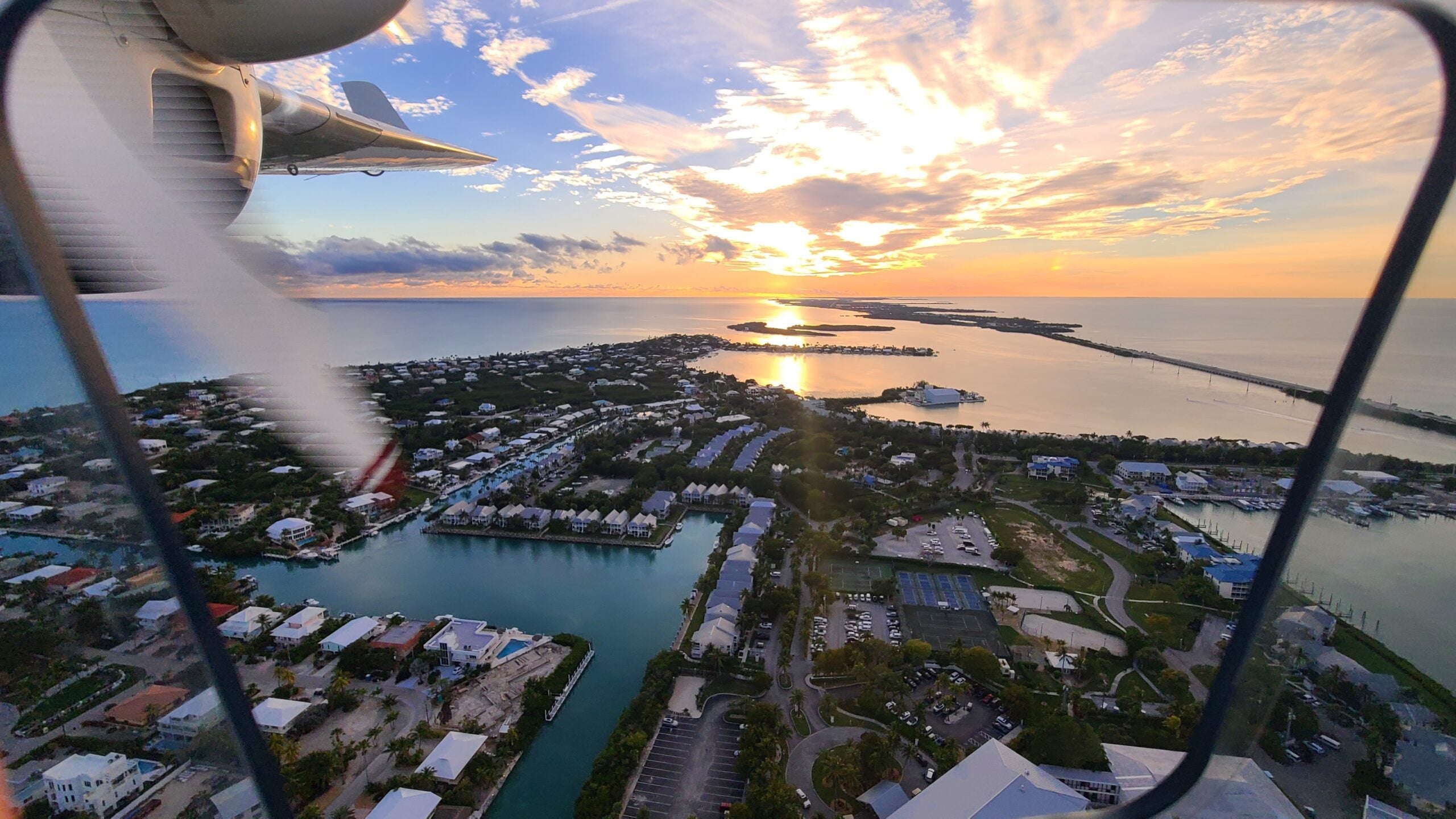
The Private Pilot License is where serious flying begins. It is the certificate that removes the training wheels, gives you the legal authority to act as pilot-in-command, and opens the door to every advanced rating above it. Instrument. Commercial. Airline. None of those happen without the Private Pilot first.
If you are researching flight training near Fort Lauderdale or Miami, this is the complete breakdown: what the FAA actually requires, what it costs at a South Florida school, how long it takes, and what you need to do before your first lesson.
What Is a Private Pilot License?
The Private Pilot Certificate, issued by the Federal Aviation Administration, authorizes you to act as pilot-in-command of an aircraft for personal and recreational purposes. With it, you can fly yourself and passengers anywhere in the United States day or night under visual flight rules, cross state lines, land at airports large and small, and begin building the experience that leads to more advanced certificates.
What you cannot do with a Private Pilot License is charge for flights or fly for hire. That requires a Commercial Pilot Certificate. But for the vast majority of pilots at the start of their journey, the PPL is the goal, and for good reason. It is the most versatile and future-proof certificate in general aviation.
FAA Requirements for a Private Pilot License
The FAA's requirements are consistent regardless of which flight school you attend or which aircraft you train in. To qualify for Private Pilot training and certification, you must:
- Be at least 17 years old to earn the certificate (you can begin training at any age and solo at 16)
- Be able to read, speak, write, and understand English
- Hold at least a Third-Class FAA Medical Certificate before flying solo
- Pass the FAA Private Pilot written knowledge test (minimum score of 70%)
- Complete the required flight hours under an FAA-approved program
- Pass a practical test, known as the checkride, with an FAA Designated Pilot Examiner
The medical certificate is worth addressing early. Most students discover no issues, but if you have a known medical condition, get your Third-Class medical before investing heavily in training. An Aviation Medical Examiner (AME) can clear most common conditions. The FAA MedXPress portal helps you locate AMEs near Fort Lauderdale and Miami.
How Many Flight Hours Does a Private Pilot License Require?
Under Part 141, which is Dynasty Aviation's primary training track, the FAA minimum is 35 flight hours. Under Part 61, the minimum is 40 hours.
Those minimums include:
- At least 20 hours of flight training with an instructor
- At least 10 hours of solo flight time
- At least 3 hours of cross-country flight training
- At least 3 hours of night flying, including 10 takeoffs and landings
- At least 3 hours of instrument training under the hood
- At least 3 hours of checkride preparation within the 60 days preceding the test
Here is what those minimums do not tell you: fewer than 20% of students finish at or near the FAA minimum. The national average is closer to 60 to 70 hours, and students who train infrequently or switch schools mid-program often log 75 to 90 hours before they are checkride-ready.
The single biggest factor in how close you finish to the minimums is training frequency. Students who fly three or more times per week build and retain proficiency far faster than those who fly once every week or two. That is not a sales pitch. It is the practical reality of how motor skills and aeronautical decision-making develop. At Dynasty Aviation, the program is built around consistent, frequent training, not just logging hours.
What Does a Private Pilot License Cost in Fort Lauderdale?
Dynasty Aviation's Part 141 Private Pilot program starts at $9,800, which covers:
- 30 hours of dual flight time with a certified flight instructor
- 5 hours of solo flight time
- 20 hours of one-on-one ground instruction
- Part 141 online ground school
That starting price is based on FAA minimums and strong student proficiency. To budget realistically for your total out-of-pocket cost, add:
- FAA written knowledge test fee: approximately $175
- Checkride examiner fee: typically $700 to $900 in South Florida
- Third-Class FAA medical exam: approximately $100 to $150
- Personal equipment (headset, kneeboard, ForeFlight subscription): $300 to $800
Most students training in the Fort Lauderdale and Miami area should plan for a total investment between $11,000 and $15,000 depending on proficiency, training frequency, and gear choices.
For a full breakdown of what every certificate costs from Private Pilot through airline career pathways, see our complete Florida flight school cost guide.
How Long Does It Take to Get a Private Pilot License in South Florida?
The honest answer is two to six months for most students, depending on how often you fly. Here is a realistic timeline based on training frequency:
Training 3 to 4 times per week (full commitment) Most students reach checkride-ready status in 8 to 12 weeks. This is the fastest path and produces the lowest total hour count because skills build continuously without decay between lessons.
Training 2 times per week (part-time with consistency) Expect 3 to 4 months to reach checkride readiness. This is achievable for working adults and is the most common training cadence for Dynasty Aviation students who balance training with careers and family.
Training once per week or less The timeline stretches significantly, often to 6 months or longer, and the total hour count typically climbs well above the minimum. Skills plateau and erode between infrequent lessons. It is not impossible, but it is the most expensive and time-consuming path per hour of progress.
One of the genuine advantages of training in South Florida is the weather. Fort Lauderdale and Miami average more than 300 flyable days per year. Students in northern states routinely lose training days to weather, which extends timelines and inflates total costs. Here, that variable is largely removed from the equation.
The Private Pilot Training Phases: What to Expect
Phase 1: Discovery Flight and Onboarding
Before committing to full training, most students start with a discovery flight. You fly with a certified flight instructor, take the controls over Fort Lauderdale Beach and Miami airspace, and get a firsthand feel for the aircraft and training environment. The debrief covers timelines, costs, and what earning your certificate actually involves.
After enrolling, you are paired with a primary instructor who builds a structured training plan around your schedule and goals.
Phase 2: Core Flight Skills and Pre-Solo Training
The early phase covers the fundamentals every Private Pilot must master: aircraft control, takeoffs and landings, airspeed management, stalls, steep turns, and ground reference maneuvers. This phase concludes with a solo endorsement once your instructor determines you can safely operate the aircraft alone.
Training at North Perry Airport (KHWO), a towered Class D airport positioned between Fort Lauderdale and Miami, means you are communicating with air traffic control from your very first lesson. That is not the case at uncontrolled fields. The radio skills and situational awareness you build at KHWO from day one accelerate your development significantly.
Phase 3: Solo Flight and Cross-Country Operations
After earning your solo endorsement, training expands into solo local flights and cross-country navigation. You will plan and fly cross-country routes, navigate South Florida airspace, and make real-world decisions without your instructor in the right seat. This phase builds the confidence and judgment the FAA is looking for at the checkride.
Phase 4: Night Flying and Advanced Proficiency
Private Pilot requirements include night flying, which is one of the most memorable parts of training. Night operations in South Florida airspace, with the Miami and Fort Lauderdale skyline visible below, are something most students remember long after their checkride.
Phase 5: Checkride Preparation
The final phase is focused preparation for the FAA practical test. You refine maneuvers, work through the oral exam material, and complete mock checkrides with your instructor until performance is consistent and confident. Dynasty Aviation does not send students to a checkride until they are ready.
Private Pilot vs. Sport Pilot: Which Should You Pursue?
If the cost and timeline of a Private Pilot License give you pause, it is worth understanding the Sport Pilot License as an alternative entry point.
The Sport Pilot License requires a minimum of 20 flight hours, costs significantly less, and does not require an FAA medical certificate. A valid driver's license is sufficient. However, it carries meaningful limitations: no night flying, only one passenger, limited to Light-Sport Aircraft, and no path toward Instrument, Commercial, or airline ratings without first upgrading to Private Pilot.
For pilots whose goal is personal recreational flying without professional aspirations, Sport Pilot is worth serious consideration. For pilots who want to fly at night, carry more than one passenger, or eventually pursue a career in aviation, the Private Pilot License is the only starting point that makes sense.
Dynasty Aviation offers both programs at North Perry Airport.
Why Train for Your Private Pilot License in Fort Lauderdale?
The Airspace Makes Better Pilots
North Perry Airport (KHWO) is one of the most active general aviation airports in the country. Training in towered South Florida airspace, within close proximity to Fort Lauderdale-Hollywood International (FLL) and Miami International (MIA), means you develop communication skills, traffic awareness, and decision-making habits from the first lesson. Pilots who train at quiet uncontrolled airports often struggle with ATC workload when they move to busier environments. Dynasty Aviation students never have that problem.
Modern Aircraft, Not Vintage Trainers
Dynasty Aviation trains exclusively in modern glass-cockpit aircraft, including the Sling LSA and Van's RV-12 iS, both equipped with Garmin G3X avionics. Learning on the same technology used in modern commercial aircraft gives you a real advantage when you advance to Instrument and Commercial training. There are no 40-year-old steam-gauge panels here.
Flexible Scheduling, Structured Training
Part 141 structure does not mean a rigid class schedule. Dynasty Aviation students train around work, family, and personal availability. There are no locked cohorts, no weekly hour minimums, and online ground school is completed on your schedule before each lesson. The structure is in the curriculum, not in when you fly.
In-House Aircraft Maintenance
Aircraft downtime is an invisible cost that most students do not account for when choosing a school. Dynasty Aviation operates in-house aircraft maintenance, which means fewer unexpected groundings and more predictable scheduling. When you book a lesson, the aircraft is ready.
How to Get Started
Step 1: Book a Discovery Flight The fastest way to know if Private Pilot training is right for you is to fly. A discovery flight puts you in the cockpit with a certified instructor, over real South Florida airspace, in the aircraft you would train in. It takes about an hour and answers every question that a website cannot.
Step 2: Schedule a Tour If you want to see the facility, meet the instructors, and walk the flight line before committing, schedule a tour. No pressure and no sales pitch, just a firsthand look at how Dynasty Aviation operates.
Step 3: Get Your Medical Contact an FAA Aviation Medical Examiner to obtain your Third-Class medical before or early in training. The FAA MedXPress portal lists local AMEs near Fort Lauderdale and Pembroke Pines.
Step 4: Enroll and Get Paired with an Instructor Once enrolled, you are paired with a primary instructor who builds a training plan around your goals, schedule, and budget. Ground school begins on your own schedule through Dynasty's online platform. Flight lessons are booked directly with your instructor.
Frequently Asked Questions
Can I start training before I get my medical certificate? Yes. You can begin ground school and log dual instruction flight time before obtaining your medical. You cannot fly solo, however, until you hold at least a Third-Class medical certificate. Getting it early is always the right move.
Can I transfer flight hours from another school? In most cases, yes. Previously logged flight time can often be credited toward your Private Pilot training depending on documentation and FAA requirements. An instructor will review your logbook to determine the best path forward.
Do I need prior experience to start? None. A discovery flight is open to anyone with no flying experience whatsoever. If you have always wanted to fly, that is all the prerequisite that exists.
What if I wear glasses? Glasses or contact lenses do not disqualify you from earning a Private Pilot License. You must meet the FAA's vision standards for a Third-Class medical, which can typically be met with corrective lenses. Your Aviation Medical Examiner will confirm at your exam.
Is financing available? Yes. Dynasty Aviation works with financing partners for students who prefer to spread the cost of training. See financing options for current details.
The Bottom Line
A Private Pilot License in Fort Lauderdale starts at $9,800 under Dynasty Aviation's Part 141 program, with a realistic all-in budget of $11,000 to $15,000. Timeline is 2 to 4 months for students who train with consistency, longer for those who cannot fly regularly.
The airspace, the aircraft, and the structure at Dynasty Aviation are built for students who are serious about finishing efficiently and flying confidently. A discovery flight is the best first step.
Book a Discovery Flight | View the PPL Program | Schedule a Tour | See All Programs
Dynasty Aviation is an FAA Part 141 approved flight school based at North Perry Airport (KHWO) in Pembroke Pines, Florida, serving student pilots throughout Fort Lauderdale, Miami, Broward County, and South Florida.
Compartir:
Part 141 vs Part 61 Flight School: Which Is Right for You?
How Long Does It Take to Get a Pilot's License in South Florida?