

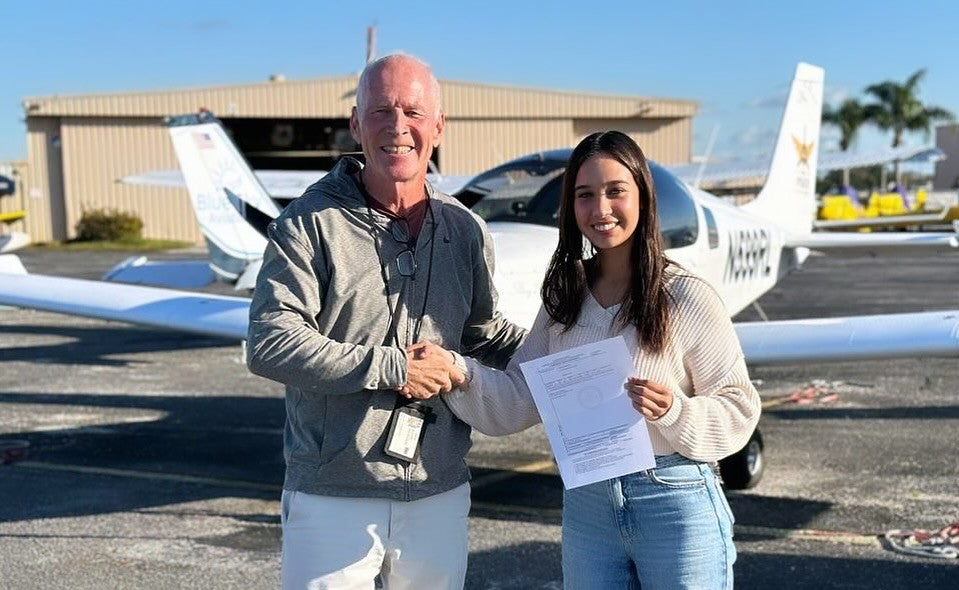
The checkride is the final step between you and your pilot certificate. It is conducted by a Designated Pilot Examiner (DPE), an experienced aviator authorized by the FAA to administer practical tests and issue temporary airman certificates on the FAA's behalf.
Every checkride has two parts: an oral examination and a flight test. You must pass both. The whole process typically takes four to six hours from start to finish. Understanding exactly what each part involves, what the examiner is evaluating, and what causes pilots to fail is the most useful preparation you can do outside of flying.
The Airman Certification Standards: The Blueprint for Your Checkride
Before covering what happens on checkride day, you need to understand the document that governs it: the Airman Certification Standards, or ACS.
The ACS is published by the FAA and defines precisely what you must know, what risks you must be able to identify and manage, and what skills you must demonstrate for each task on the checkride. The DPE uses it as the testing blueprint. If a task is in the ACS, it is fair game. If it is not in the ACS, it will not be on your checkride.
The ACS replaced the older Practical Test Standards (PTS) for the Private Pilot, Instrument, and Commercial certificates. The current version for Private Pilot is FAA-S-ACS-6B. Your instructor will reference it throughout your training, particularly in the final preparation phase. If you are close to your checkride and have not read the ACS yourself, that is the single most useful thing you can do before you walk in.
Before Checkride Day: What to Prepare
Complete a cross-country flight plan. Most DPEs assign a cross-country route the evening before or morning of the checkride and ask you to arrive with a complete flight plan. This includes weather briefing, performance calculations, weight and balance, fuel requirements, NOTAMs, and a navigation log. The oral exam will begin here.
Gather your documents. You must bring:
- Government-issued photo ID
- FAA written knowledge test results (must be within 24 months)
- Logbook with all required endorsements from your instructor
- Valid FAA medical certificate (Third Class minimum for Private Pilot)
- Completed IACRA application (FAA Form 8710-1) submitted online
- Aircraft documents: airworthiness certificate, registration, operating limitations, and weight and balance
Know your aircraft. The DPE will ask questions specific to the aircraft you are flying the checkride in. Know the Pilot's Operating Handbook (POH) thoroughly, including systems, limitations, emergency procedures, and performance charts.
Part One: The Oral Exam
The oral exam typically lasts one and a half to two and a half hours. It is conducted by the DPE at a desk or briefing table, not in the cockpit. You will be evaluated on knowledge and risk management across every area of the ACS.
How the Oral Exam Works
The DPE will walk through the cross-country flight plan you prepared and use it as a foundation for the oral. Expect questions about weather interpretation, airspace along the route, aircraft performance calculations, fuel requirements, and what you would do if conditions changed. From there, the oral expands into the broader knowledge areas.
The oral exam is open book in a specific sense: you can reference the POH, sectional charts, the FAR/AIM, and other approved documents. You cannot look up everything, but knowing where to find information and retrieving it quickly is acceptable and demonstrates professionalism. DPEs view it positively when a student says "I want to confirm that" and locates the answer rather than guessing.
The oral is pass/fail with no score. You either meet the ACS standards for each task area or you do not.
What the DPE Is Actually Evaluating
The ACS organizes knowledge into three elements for each task: what you know, what risks you can identify and manage, and what you can do in the aircraft. The oral covers the first two.
DPEs in 2026 place particular emphasis on aeronautical decision-making and risk management, not just factual recall. Expect scenario-based questions: "You are on a cross-country and your weather deteriorates. Walk me through your decision-making." The examiner is assessing whether you think like a safe pilot, not whether you can recite regulations verbatim.
Common Oral Exam Topic Areas
- Pilot qualifications and currency requirements
- Airworthiness: what makes an aircraft legal to fly, required inspections, MEL
- Weather: METAR, TAF, PIREPs, winds aloft, SIGMETs, AIRMETs
- Airspace: classifications, requirements, and how to navigate them
- Navigation: chart reading, VOR, GPS, cross-country planning
- Aircraft systems: engine, electrical, fuel, pitot-static
- Performance: takeoff distance, climb rate, fuel burn, density altitude
- Regulations: FARs relevant to private pilot operations
- Emergency procedures: engine failure, electrical failure, inadvertent IMC
- Night operations: physiology, currency requirements, lighting
If You Do Not Know an Answer
Say so clearly, then offer to look it up if the information is available in a document you have with you. DPEs respect intellectual honesty far more than confident wrong answers. Saying "I don't know that off the top of my head, but I believe it's in the POH and I can find it" is a professional response. Guessing incorrectly on a safety-critical topic is a red flag.
Part Two: The Flight Test
If you pass the oral exam, the checkride moves to the aircraft for the flight test. The DPE will brief what the flight test will involve based on the ACS task areas.
Pre-Flight Inspection
The flight test begins on the ground with a pre-flight inspection. The DPE observes your inspection process. They are watching for thoroughness and whether you know what you are looking at, not just whether you go through the motions. At Dynasty Aviation, students learn pre-flight inspection as a professional discipline from the first lesson, which makes this portion of the checkride a demonstration of established habit rather than a performance.
The Cross-Country Departure
The flight test typically begins with departure on the cross-country route you planned. You will fly the first leg of the route, demonstrating navigation, communications, situational awareness, and the ability to manage the cockpit while talking to ATC and flying the aircraft accurately.
After several minutes on the cross-country, the DPE will typically divert you to a nearby airport, asking you to navigate there without prior planning. This tests your ability to adapt, use available resources, and make real-time decisions, which is core to the risk management emphasis of the 2026 ACS.
Maneuvers
After the cross-country and diversion, the flight test moves into the maneuver phase. The DPE will ask you to demonstrate tasks from the ACS. For the Private Pilot certificate, these typically include:
- Steep turns (45-degree bank, within ACS tolerances)
- Slow flight
- Power-off and power-on stalls
- Ground reference maneuvers (S-turns, turns around a point)
- Emergency descent
- Simulated engine failure with forced landing
- Recovery from unusual attitudes (under the hood)
- Traffic pattern operations and landings, including short-field and soft-field
The ACS specifies the tolerances for each maneuver. For example, steep turns require maintaining altitude within 100 feet and heading within 10 degrees upon rollout. The DPE documents whether each task meets ACS standards.
Simulated Emergencies
Expect at least one simulated emergency, most commonly an engine failure at altitude. The DPE will pull power and observe how you respond: trim for best glide, identify a landing field, run through emergency procedures, and fly a realistic approach to the field. You will not actually land in a field. The DPE will wave off the approach at a safe altitude. What they are evaluating is your judgment, your procedure execution, and whether your chosen field was genuinely landable.
Landings
The flight test typically ends with landings at the airport. You will be asked to demonstrate at minimum a normal landing, a short-field landing, and a soft-field landing or takeoff. Traffic pattern communications, crosswind correction, and landing precision are all evaluated.
After the Flight
The DPE will debrief you after the flight. If you passed, they will complete the paperwork and issue your temporary airman certificate on the spot. You are a certificated pilot from that moment. Your permanent certificate arrives in the mail from the FAA within several weeks.
If you did not pass a specific task, the DPE will identify the areas of unsatisfactory performance on FAA Form 8710. You return to your instructor for additional training on those specific areas and schedule a retest covering only what was unsatisfactory. You do not repeat the entire checkride.
The Most Common Reasons Pilots Fail
Understanding why checkrides fail helps you avoid the same outcomes.
Oral exam preparation gaps. The most common failure point in the oral is weather interpretation and airspace. Students who complete thorough ground school and study the ACS systematically rarely fail the oral. Students who rely on flight time alone without dedicated knowledge study often do.
Altitude deviations in steep turns. Steep turns require precise altitude control through a 360-degree turn at 45 degrees of bank. Students who have not practiced until the maneuver is automatic rather than effortful struggle with the ACS tolerances under checkride pressure.
Unstabilized approaches. The DPE will observe every approach for stabilization. A consistently high or low approach, a late correction, or a poorly executed go-around can result in an unsatisfactory for landing tasks.
Radio communication hesitation. Students who trained at uncontrolled fields and then take their checkride at a towered airport sometimes struggle with ATC communication flow. Dynasty Aviation students train at North Perry Airport (KHWO), a towered field, from lesson one, which eliminates this as a variable.
Going to the checkride before you are ready. The single most preventable cause of checkride failure is scheduling the test before the student has demonstrated consistent ACS-standard performance across all task areas. A well-run Part 141 program uses stage checks throughout training to catch deficiencies early. Dynasty Aviation does not submit students for a checkride until performance across all ACS areas is consistent and confident.
How Dynasty Aviation Prepares Students for the Checkride
The final phase of Dynasty Aviation's Private Pilot program at North Perry Airport is dedicated checkride preparation. This includes:
- Mock oral exams covering ACS topic areas with your primary instructor
- Mock checkride flights simulating the full test sequence, including cross-country diversion, all maneuvers, and simulated emergencies
- Stage checks conducted by a check instructor separate from your primary CFI, which mirrors the checkride dynamic of flying with someone who has not been with you throughout training
- DPE coordination through Dynasty Aviation's established relationships with local Designated Pilot Examiners serving the Fort Lauderdale and Miami area
By the time a Dynasty Aviation student sits for their checkride, the test format, the timing, the maneuver sequence, and the oral topics are familiar. The checkride becomes a demonstration of established proficiency rather than a high-stakes unknown.
Frequently Asked Questions
How long does a checkride take? Plan for four to six hours from start to finish for a Private Pilot checkride. The oral portion typically runs one and a half to two and a half hours. The flight test typically runs one and a half to two hours. Time between portions and paperwork adds to the total.
How much does a checkride cost? DPE fees in the Fort Lauderdale and Miami area typically run $700 to $900 for a Private Pilot checkride. This is paid directly to the examiner and is separate from aircraft rental costs for the flight test. Budget approximately $1,000 to $1,200 total including aircraft time.
What happens if I fail part of the checkride? If you fail a specific task during the oral or flight test, the DPE identifies the unsatisfactory areas and the checkride ends for those portions. You return to your instructor for additional training on those specific areas and retest only what was unsatisfactory. You do not repeat portions you already passed.
Can I bring my instructor to the checkride? No. The checkride is conducted between you and the DPE. Your instructor cannot be present. This is intentional: the DPE is evaluating whether you, as pilot-in-command, can operate safely without instructor support.
What do I do if the DPE asks something I do not know? Be honest, then try to find the answer in an available reference. Saying "I would need to look that up in the POH" and then doing so correctly is an acceptable and professional response.
Can I use my phone or iPad during the checkride? For navigation and reference use, yes. Electronic Flight Bags including ForeFlight are widely accepted by DPEs and routinely used during the flight test. Ensure your device is charged, your apps are current, and you know how to use the tools efficiently before checkride day.
Book a Discovery Flight | View the Private Pilot Program | See All Programs | Contact Us
Dynasty Aviation is an FAA Part 141 approved flight school based at North Perry Airport (KHWO) in Pembroke Pines, Florida, serving student pilots throughout Fort Lauderdale, Miami, Broward County, and South Florida.
分享:
How to Train Smarter and Save Money
How to Preflight the Sling 2: Step-by-Step Guide