

Everyone asks this question before they start. The answer depends almost entirely on two things: what certificate you are going for and how often you fly. Everything else, the school, the aircraft, the airspace, is a factor, but those two variables drive more of your timeline than anything else.
Here is the honest breakdown by certificate, based on what students at Dynasty Aviation actually experience training at North Perry Airport (KHWO) in the Fort Lauderdale and Miami corridor.
The Short Answer: Timeline by Certificate
| Certificate | Full-Time Training | Part-Time (2-3x per week) |
|---|---|---|
| Sport Pilot License | 4 to 6 weeks | 2 to 3 months |
| Private Pilot License | 6 to 10 weeks | 2 to 4 months |
| Instrument Rating | 6 to 10 weeks | 2 to 3 months |
| Commercial Pilot License | 3 to 5 months | 6 to 12 months |
| CFI / CFII / MEI | 4 to 8 weeks each | 2 to 3 months each |
| Zero to Airline Ready | 18 to 24 months total | 3 to 4 years total |
These are realistic ranges, not marketing minimums. The FAA publishes minimum flight hour requirements. Real training timelines depend on how consistently students fly, how prepared they come to each lesson, and how well the school's structure keeps them progressing.
Why South Florida Is Faster Than Almost Anywhere Else
Before breaking down each certificate, this matters: geography is a legitimate training variable in Florida, not a talking point.
Fort Lauderdale and Miami average more than 300 flyable days per year. Students training in the Northeast, Midwest, or Pacific Northwest routinely lose multiple training days per month to weather. Those missed days do not just extend the calendar timeline. They erode proficiency between lessons, which means students repeat maneuvers they had already mastered and spend extra flight hours getting back to where they were.
At North Perry Airport (KHWO), weather-related groundings are the exception rather than the rule. Students who train here move faster through every stage than they would at a comparable school in a seasonal climate, and they spend less in total flight hours getting there.
Sport Pilot License: 2 to 3 Months Part-Time
The Sport Pilot License is the fastest entry into aviation. The FAA requires a minimum of 20 flight hours, and students who train consistently frequently finish close to that number.
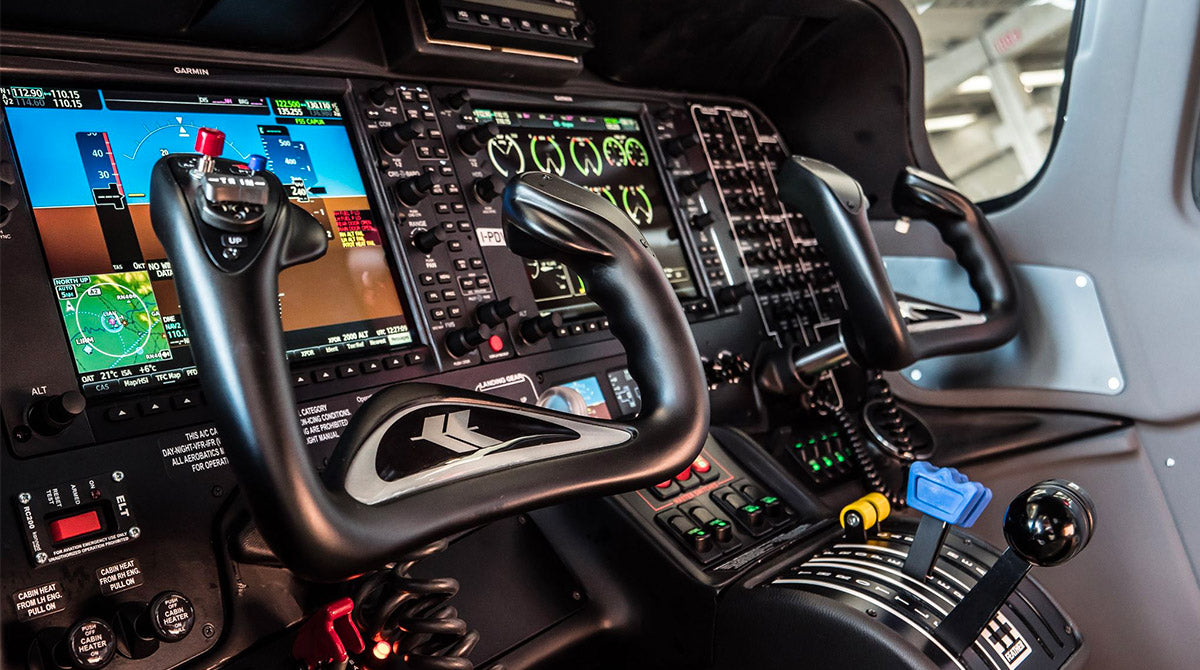
Dynasty Aviation is one of the few schools in South Florida offering Sport Pilot training in modern glass-cockpit Light-Sport Aircraft, including the Sling LSA and RV-12 iS. No FAA medical certificate is required. A valid driver's license is sufficient to fly solo and complete the certificate.
Part-time students flying two to three times per week typically finish in 2 to 3 months. Full-time students training daily can complete Sport Pilot in 4 to 6 weeks.
The Sport Pilot License is the right starting point for pilots whose goal is recreational personal flying. It is not the right starting point for pilots who eventually want to fly at night, carry multiple passengers, or pursue a career. If those are your goals, the Private Pilot License is where you start.
Private Pilot License: 2 to 4 Months Part-Time
The Private Pilot License is the most common starting certificate and the one that opens every door above it. Dynasty Aviation's Part 141 Private Pilot program requires a minimum of 35 flight hours under an FAA-approved curriculum.
The FAA minimum is not the same as the average. Nationally, most students log 60 to 70 hours before they are checkride-ready. Students who train infrequently or switch schools mid-program often log 75 to 90 hours. The gap between 35 hours and 70 hours is not about difficulty. It is almost entirely about training frequency and consistency.
What drives the timeline:
- Students flying 3 to 4 times per week typically reach checkride readiness in 6 to 10 weeks
- Students flying 2 times per week typically take 3 to 4 months
- Students flying once per week or less typically take 5 to 8 months and log significantly more total hours
Ground school is a parallel track that does not extend the timeline if completed on your own schedule. Dynasty Aviation's online ground school is designed to be completed before each lesson rather than in a classroom setting, which eliminates scheduling bottlenecks and lets you apply what you study directly in the cockpit.
For a full breakdown of what the Private Pilot program costs at each stage, see the complete Florida flight school cost guide.
Instrument Rating: 2 to 3 Months Part-Time
The Instrument Rating is the logical next step after your Private Pilot certificate, and it is the one that makes you a meaningfully safer and more capable pilot. It qualifies you to fly in clouds, reduced visibility, and controlled airspace under instrument flight rules.
At Dynasty Aviation, Instrument Rating training includes structured simulator sessions for the procedural phases of training, which reduces the cost of building instrument proficiency before moving into the aircraft. The FAA requires 35 hours of instrument training under Part 141.
Part-time students flying 2 to 3 times per week generally complete their Instrument Rating in 2 to 3 months after earning their Private Pilot certificate. Full-time students can finish faster.
Training in South Florida airspace is a specific advantage here. Daily exposure to Class B and Class C operations, ATC sequencing, and IFR procedures in the Fort Lauderdale and Miami corridor accelerates real-world instrument proficiency in a way that low-traffic rural environments simply do not.
Commercial Pilot License: 6 to 12 Months Part-Time
The Commercial Pilot License is what qualifies you to be paid to fly. Under Dynasty Aviation's Part 141 Commercial program, the FAA minimum is 190 total flight hours. Under Part 61, that minimum rises to 250 hours.
Most students entering commercial training already have 150 to 200 hours from their Private and Instrument training, so the remaining flight time requirement varies by individual. The commercial curriculum adds precision maneuvers, advanced cross-country operations, and the technical depth that commercial-level flying demands.
Part-time students typically complete the Commercial certificate 6 to 12 months after finishing their Instrument Rating. Full-time students in a structured program can move faster, particularly if they are close to the 190-hour minimum entering the commercial phase.
CFI, CFII, and MEI: 4 to 8 Weeks Each
Certified Flight Instructor training is the step most career-track pilots pursue immediately after their Commercial certificate. It is also the most efficient way to build the 1,500 hours required for airline eligibility, because you get paid to fly while you teach.
At Dynasty Aviation, CFI training starts at $5,700 for the single-engine certificate, and most prepared students complete it in approximately one month. CFII and MEI ratings typically take a similar amount of time each, depending on preparation and training frequency.
Many professional pilots pursue all three, CFI, CFII, and MEI, in sequence. Done efficiently, all three can be completed in 3 to 5 months, after which you are qualified to teach across single-engine, instrument, and multi-engine programs.
Zero to Airline-Ready: 18 to 24 Months Full-Time
If your goal is a first officer seat at a regional airline, the full timeline from zero experience to 1,500 hours looks like this:
Months 1 to 3: Private Pilot License Months 3 to 5: Instrument Rating Months 5 to 9: Commercial Pilot License Months 9 to 12: CFI, CFII, MEI Months 12 to 24: Time building as a flight instructor toward 1,500 hours
That puts most full-time, career-track students in front of a regional airline recruiter in 18 to 24 months from their first lesson. Part-time students on a consistent training schedule should plan for 3 to 4 years.
Dynasty Aviation's Elite Cadet Program is built specifically for this pathway. It takes students who already hold a Private Pilot License and Instrument Rating from IR through CFII in 8 months, then transitions them into a paid instructor role with a guaranteed pathway to 1,500 flight hours at Dynasty Aviation. It is the most direct route to the airlines available in South Florida.
The Variable Nobody Talks About: Training Consistency
Timelines in aviation are not purely a function of how many days you train. They are a function of skill retention between lessons. Motor memory in the cockpit follows the same rules as any physical skill. The more frequently you practice, the faster it develops and the less it decays.
A student who flies Monday, Wednesday, and Friday builds exponentially more proficiency than one who flies just once each week, even though the weekly hour count might be similar over a month. The Monday-Wednesday-Friday student arrives at each lesson with the last flight still fresh. They progress through maneuvers and phases faster, repeat fewer lessons, and reach checkride readiness with fewer total hours.
This is not abstract. At Dynasty Aviation, students who train at least twice per week consistently reach their certificates faster and with lower total costs than students who train less frequently, regardless of overall intelligence or aptitude.
Consistency is not a personality trait. It is a scheduling decision. Building your training around a reliable weekly structure at the start is one of the most financially impactful choices you will make in flight school.
Does Your Age Affect the Timeline?
No. The FAA sets minimum age requirements for solo flight (16) and for earning certificates (17 for Private, 18 for Commercial), but beyond those floors, age is not a limiting factor in how quickly you progress. Adults who start training at 30, 40, or 50 follow the same timeline progression as younger students. The same consistency rules apply.
The one practical consideration for career-track pilots starting later is the seniority system. Airline seniority is everything in commercial aviation, and time spent delaying the start of training is time that cannot be recovered on the seniority list. If becoming an airline pilot is the goal, starting sooner is always better than starting later, regardless of age.
What Slows Students Down
Knowing the common timeline killers helps you avoid them:
Infrequent training is the single biggest factor. Gaps of more than a week between lessons consistently extend total training time.
Underfunding mid-program forces training interruptions that reset proficiency and add hours. Budget for the full program before starting, not lesson by lesson.
Changing schools mid-training creates friction around hour credits, syllabus compatibility, and instructor relationships. Choose carefully up front.
Skipping ground school prep means arriving at each flight lesson without the knowledge to apply what you are practicing. Ground school and flight training should run in parallel, not sequentially.
Checkride unpreparedness adds lessons at the end when students are not ready for the practical test. A well-run Part 141 program uses stage checks throughout to prevent this.
How to Get Started
The fastest way to understand your personal timeline is to fly. A discovery flight at Dynasty Aviation puts you in the cockpit over South Florida airspace for about an hour, and the debrief afterward covers exactly what your training path looks like based on your schedule, goals, and starting point.
From there, scheduling a tour or talking directly with the admissions team gives you a realistic program recommendation before you commit to anything.
Book a Discovery Flight | View All Programs | See Financing Options
Dynasty Aviation is an FAA Part 141 approved flight school based at North Perry Airport (KHWO) in Pembroke Pines, Florida, serving student pilots throughout Fort Lauderdale, Miami, Broward County, and South Florida.
Share:
Private Pilot License in Fort Lauderdale: Requirements, Cost, and Timeline
How to Become an Airline Pilot: The Complete Roadmap (2026)