

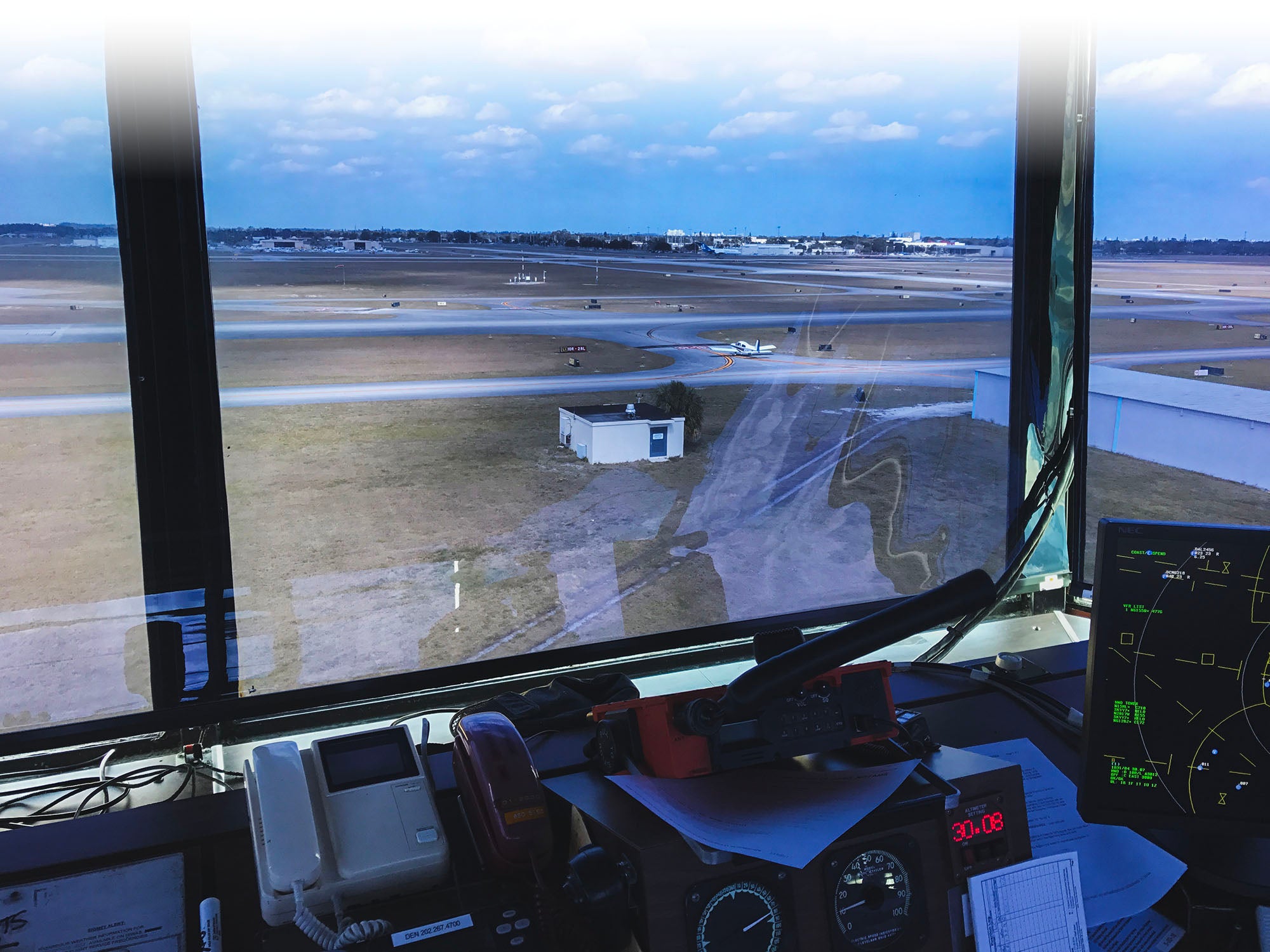
Unmatched Flight Training Facilities
North Perry Airport was chosen intentionally. It combines towered operations, instrument approaches, and high-density airspace in a location that supports faster skill development and real-world proficiency. Training here prepares pilots to operate confidently in complex environments from the start, not relearn fundamentals later.
Towered Environment
North Perry Airport operates as a busy, towered airport with published instrument approaches and constant ATC interaction. Students train in complex airspace from day one, building confidence in radio work, traffic management, and real-world decision-making that directly translates beyond training.
Aviation Job Density
The surrounding area supports one of the highest concentrations of entry-level aviation jobs in the country. Banner towing, survey flying, and commercial operations create multiple paths to build hours quickly without relying solely on flight instruction.
Proximity That Retains Pilots
Minutes from Miami and Fort Lauderdale, North Perry offers access to beaches, entertainment, and major airline hubs. Students train where pilots want to live, network, and transition into airline and corporate careers without relocating.

Multiple Runways. Built for Efficiency.
North Perry Airport (KHWO) is designed for high-volume general aviation with multiple parallel runways and streamlined taxi access. That layout reduces ground delays, minimizes back-taxi time, and keeps aircraft moving. More time in the air. Less time waiting.
Students train in a controlled, tower-managed environment where sequencing and runway changes are routine. The result is efficient lesson flow, consistent departures, and smoother training progression compared to single-runway airports with congestion bottlenecks.
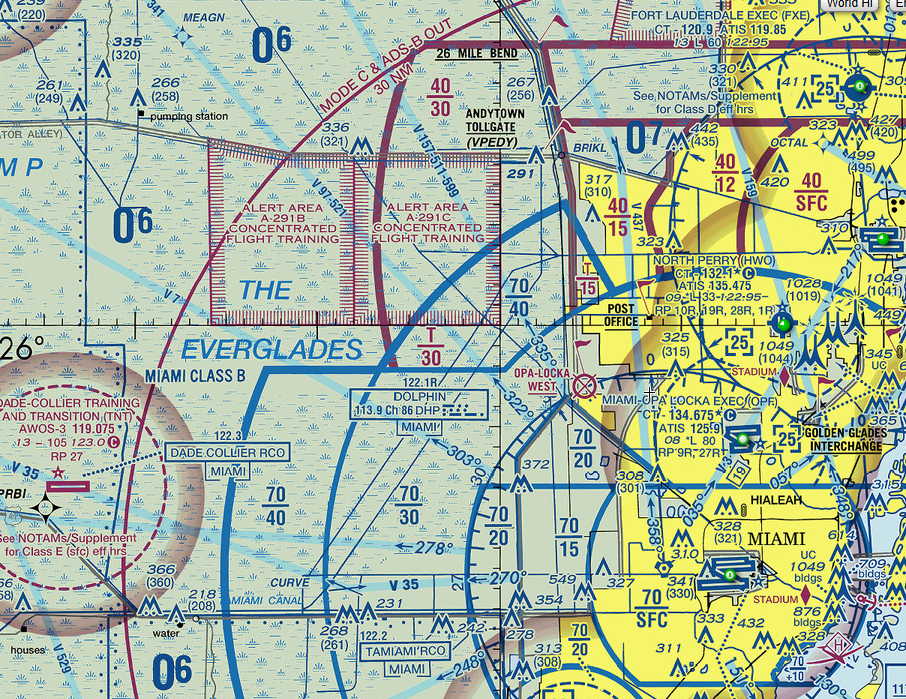
Immediate Exposure to Complex Airspace
Positioned beneath the Miami Class B shelf and adjacent to Fort Lauderdale’s Class C airspace, KHWO offers direct integration into layered, metropolitan airspace. Bravo transitions, coordinated ATC handoffs, coastal routing, and busy traffic flows are part of everyday training.
Pilots graduate comfortable managing structured airspace, confident in radio communication, and prepared to operate in high-density aviation environments well beyond South Florida.
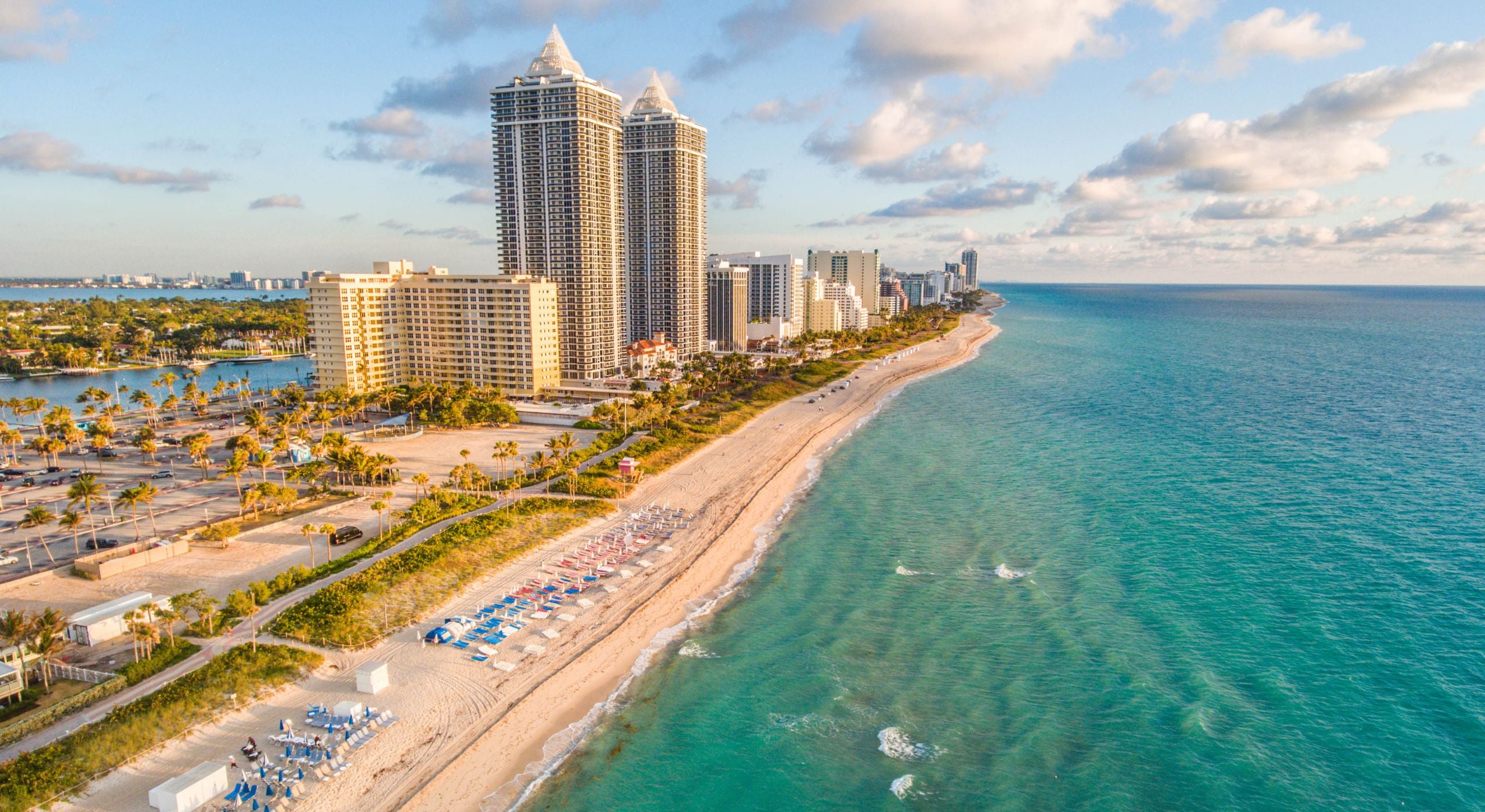
Year-Round Flying Conditions
North Perry Airport offers one of the most consistent flight training climates in the country, with 300+ flyable days per year. South Florida’s stable weather means fewer cancellations, tighter training schedules, and faster progress from lesson to lesson.
Warm temperatures and predictable conditions allow students to train year-round without long seasonal interruptions. More time in the air leads to better proficiency, stronger confidence, and a more efficient path to certification.

Efficient Training Without Dead Time
Busy does not mean inefficient. North Perry’s layout and procedures allow Dynasty to run consistent schedules with minimal delays. Taxi times are short, departures are frequent, and lessons stay focused on training objectives rather than waiting for access to the runway.
Flight Training at North Perry Airport in South Florida
North Perry Airport is not a quiet patch of asphalt at the edge of town. It is one of the most active general aviation airports in the United States, a towered Class D facility sitting in the geographic center of the South Florida aviation corridor, positioned between Fort Lauderdale-Hollywood International (FLL) to the northeast and Miami International (MIA) to the south.
Dynasty Aviation has been training pilots at KHWO since the school's founding. Every program, from Sport Pilot through the Elite Cadet airline pathway, is conducted here. This page covers what the airport is, why it matters for your training, and what daily flight operations actually look like from the pilot's seat.
North Perry Airport: The Basics
Official identifiers: ICAO: KHWO | IATA: HWO | FAA LID: HWO
Location: Pembroke Pines, Broward County, Florida
Elevation: 8 feet MSL
Ownership: Broward County Aviation Department
Tower: Yes. Towered Class D airspace with ATC in operation during published hours.
Airport type: Public general aviation
North Perry sits on approximately 536 acres in Pembroke Pines, roughly 5 miles west of Hollywood's central business district and approximately 25 to 30 minutes from downtown Miami via I-95. The airport serves exclusively general aviation and training operations and is closed to aircraft over 12,500 pounds maximum certified takeoff gross weight, which keeps the traffic mix focused on light aircraft and training operations.
The airport is known by multiple names, North Perry Airport, Hollywood North Perry Airport, and simply KHWO, all of which reflect its location and history. The HWO identifier comes from Henry D. Perry, a dairy farmer who sold the original 640 acres to the United States Navy in 1943 for use as a training field during World War II. It has been a pilot training hub ever since.
Why KHWO Produces Better Pilots
The single most important thing to understand about training at North Perry is what it does to a student pilot's development compared to training at an uncontrolled or low-traffic field.
You communicate with ATC from day one. At KHWO, there is no easing into radio work. From the first lesson, you call ground control for taxi clearance, contact the tower for takeoff, and work with approach control on departure and return. This is not something you can replicate at an uncontrolled field and then learn later. At busy towered airports, the communication patterns, the phraseology, the discipline of listening and responding precisely, become instinct only through repetition. KHWO students build that instinct from lesson one.
The traffic volume forces situational awareness. North Perry is one of the most active training airports in the country, with high volumes of banner towing operations, student flights, and transient traffic operating in and around the airport environment simultaneously. FAA airport remarks specifically call out the high volume of banner towing and student flight activity in the vicinity. Learning to see, sequence, and communicate in that environment produces pilots who are calm and organized in complex airspace.
The airspace is genuinely demanding. KHWO sits within Miami approach and departure control airspace usable at 4,000 feet and below, with proximity to Fort Lauderdale Class C and Miami Class B airspace on either side. Cross-country flights out of KHWO routinely involve transitions through or around Class B and C airspace, overwater legs along the coast, and complex departure and arrival routing. By the time Dynasty Aviation students reach their instrument training, they have already been operating in one of the most sophisticated airspace environments in the country for months.
South Florida weather creates real-world pilot judgment. Florida is widely praised for its flyable weather, and 300-plus flyable days per year is real. But South Florida also produces afternoon convective weather that requires genuine go/no-go decision-making from student pilots earlier in their training than most schools elsewhere in the country. That judgment, built under the supervision of experienced instructors who know this airspace, is one of the most valuable things a KHWO-trained pilot carries into their aviation career.
The Airspace Around KHWO
Understanding the airspace around North Perry is part of every Dynasty Aviation student's early training. Here is the operating environment:
Class D Airspace (KHWO itself): The airport operates towered Class D airspace during published hours. Communication with KHWO Tower is required for all operations within the Class D. When the tower is closed, the Common Traffic Advisory Frequency (CTAF) is used and runway lighting is pilot-controlled.
Fort Lauderdale Class C (KFLL): Fort Lauderdale-Hollywood International is located northeast of KHWO. Its Class C airspace extends from the surface to 4,000 feet and has a shelf from 1,200 to 4,000 feet in the surrounding area. KHWO students frequently transition through or near KFLL airspace on cross-country flights and local training routes, requiring coordination with Fort Lauderdale Approach.
Miami Class B (KMIA): Miami International's Class B airspace is the large-scale controlled airspace that defines the southern training boundary. Miami Approach/Departure frequencies are usable from KHWO at 4,000 feet and below. Instrument Rating students at Dynasty Aviation work within this environment as part of their IFR training, building the ATC communication skills and procedural fluency that commercial aviation demands.
Coastal and Overwater Routes: The Atlantic coastline runs approximately 5 to 8 nautical miles east of KHWO. Training routes along the coast, over the ocean, and south toward the Keys and the Bahamas corridor are accessible on most flights. The combination of overwater navigation, coastal VFR landmarks, and proximity to busy terminal areas makes South Florida one of the most comprehensive training environments in the country.
What a Training Day at KHWO Looks Like
For Dynasty Aviation students, a typical training day at North Perry follows a consistent pattern built around preparation, execution, and debrief.
Before the flight: Students complete their online ground school module for the day's lesson before arriving at the airport. Pre-flight briefing with the instructor covers the lesson objectives, weather review, ATIS information, and any relevant NOTAMs for the training area.
Pre-flight inspection: Every flight begins with a thorough pre-flight inspection of the aircraft. Dynasty Aviation's fleet of Sling LSA, Van's RV-12 iS, and Tecnam P2006T aircraft are maintained in-house, which means they are consistently airworthy and ready. Students learn the pre-flight inspection as a professional discipline from lesson one.
Taxi and departure: Ground control clears the aircraft to taxi. Tower clears it for takeoff. From the first solo lesson onward, every communication is student-initiated. Instructors observe and coach, but the radio belongs to the student.
The flight itself: Lesson content varies by stage. Early lessons focus on aircraft control, pattern work, and basic maneuvers in the immediate KHWO area. Later lessons expand into the broader South Florida training area: coastal routes, cross-country navigation, instrument approaches, and eventually the complex airspace work that marks advanced training.
Post-flight debrief: Every lesson ends with a structured debrief. What went well, what needs work, what the next lesson builds toward. Dynasty Aviation's one-on-one instruction model means this debrief is specific to the individual student, not generic feedback for a group.
Programs Available at KHWO Through Dynasty Aviation
All of the following programs are conducted exclusively at North Perry Airport:
- Sport Pilot License: Minimum 20 flight hours. No FAA medical required.
- Private Pilot License: Part 141, starting at $9,800. The foundation for all advanced training.
- Instrument Rating: IFR training in South Florida's Class B and C corridor.
- Commercial Pilot License: Part 141, 190-hour minimum. Precision maneuvers in demanding airspace.
- CFI / CFII / MEI: Instructor certifications for career-track pilots building hours.
- Elite Cadet Program: IR through CFII in 8 months, then a guaranteed 1,500-hour pathway instructing at KHWO.
- Multi-Engine Rating: Tecnam P2006T twin-engine training.
- Time Building Packages: Structured hour-building for licensed pilots working toward commercial or airline minimums.
For a full look at how long each program takes to complete from North Perry Airport, see the South Florida pilot training timeline guide. For a breakdown of what each program costs, see the Florida flight school cost guide.
Getting to North Perry Airport
Dynasty Aviation address: 601 SW 77th Way, Pembroke Pines, FL 33023
From Fort Lauderdale: Take I-95 South or the Turnpike south to Pines Boulevard, then head west to SW 77th Way. Approximately 15 to 20 minutes from downtown Fort Lauderdale.
From Miami: Take I-95 North or the Turnpike north to Pines Boulevard, then head west. Approximately 25 to 35 minutes from downtown Miami depending on traffic and your starting point.
From Boca Raton and Palm Beach County: I-95 South to Pines Boulevard, then west. Approximately 35 to 45 minutes.
Parking: Free on-site parking is available at Dynasty Aviation's facility on the south side of North Perry Airport.
Frequently Asked Questions About KHWO Training
Is North Perry Airport the same as Hollywood Airport?
Yes. North Perry Airport is also known as Hollywood North Perry Airport, which is where the HWO identifier comes from. It is located in Pembroke Pines, just west of Hollywood, Florida. It is not the same airport as Fort Lauderdale-Hollywood International (FLL), which is a commercial service airport several miles to the northeast.
What are KHWO's operating hours?
The tower operates during published hours. When the tower is closed, KHWO operates on CTAF. Dynasty Aviation's flight operations are conducted during daylight and into evening hours depending on lesson type. Contact the school directly for current scheduling availability.
Is North Perry Airport busy?
Very. KHWO handles one of the highest volumes of general aviation training traffic in South Florida, with multiple flight schools, banner towing operations, and transient aircraft operating simultaneously. This is one of the features, not a drawback. It is the environment that builds better pilots faster.
Can I do a discovery flight at KHWO?
Yes. A discovery flight at Dynasty Aviation launches from North Perry Airport and covers Fort Lauderdale Beach and Miami airspace. You take the controls, work with a certified instructor, and see exactly what training here looks like from inside the cockpit.
Are there other flight schools at North Perry?
Yes. Several flight schools operate at KHWO. Dynasty Aviation competes on aircraft quality, instruction model, program structure, and review volume. A tour of the facility and a conversation with the team is the best way to evaluate the difference firsthand.
Start Training at North Perry Airport
Dynasty Aviation is accepting new students at KHWO. The best first step is a discovery flight or a facility tour, both of which are available to book online with no commitment required.
Book a Discovery Flight | Schedule a Tour | View All Programs | Contact Us
Call or text: (954) 605-0826
601 SW 77th Way, Pembroke Pines, FL 33023
Dynasty Aviation is an FAA Part 141 approved flight school based at North Perry Airport (KHWO) in Pembroke Pines, Florida, serving student pilots throughout Fort Lauderdale, Miami, Broward County, and South Florida.

Flight Training Built for Your Success
Rated 5/5 by 400+ verified reviews
Train in modern aircraft with experienced instructors at a South Florida flight school trusted by students from Miami to Fort Lauderdale.