

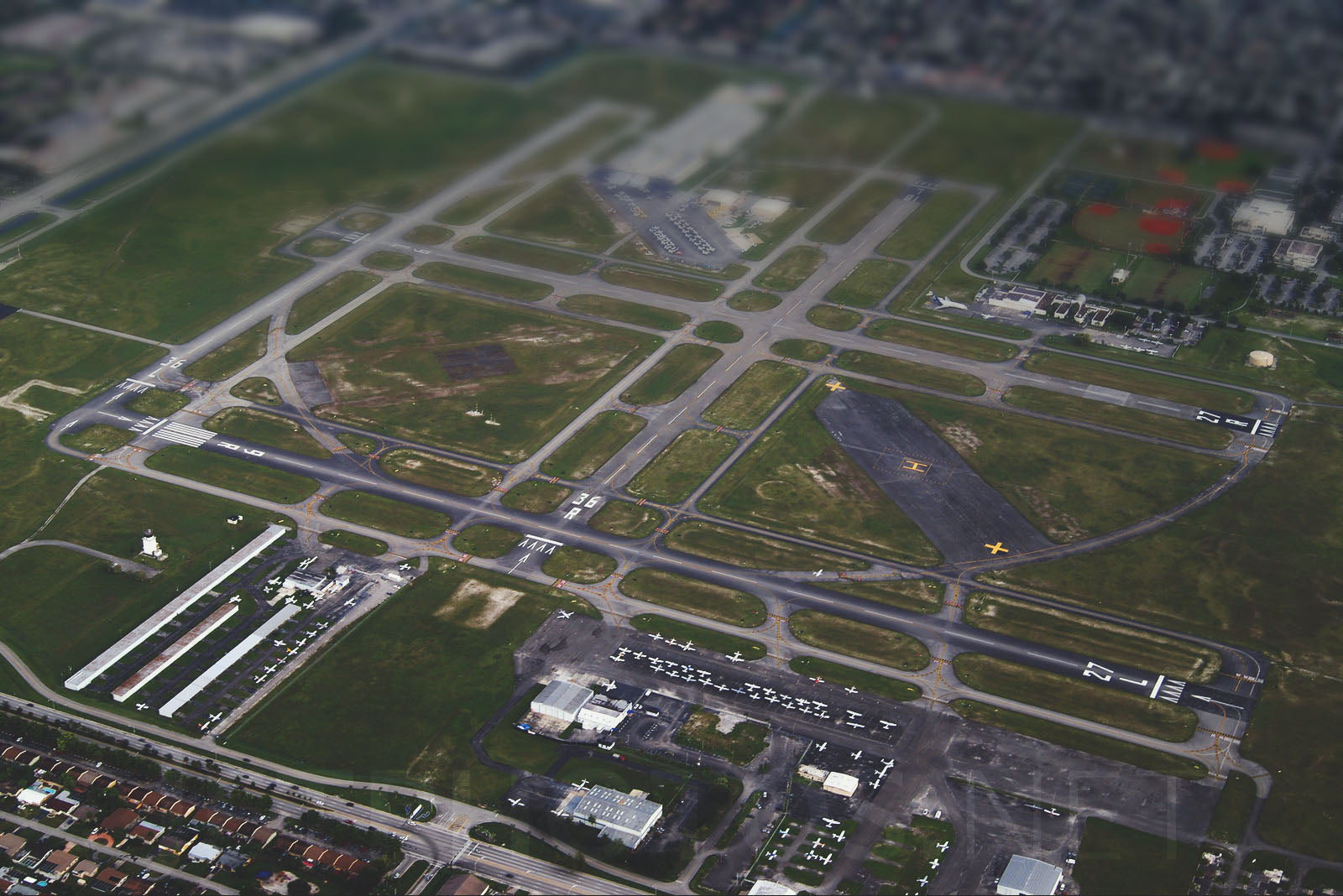
If you hold a Private Pilot, Instrument Rating, or Commercial Pilot certificate and are building toward 1,500 hours, North Perry Airport (KHWO) in Pembroke Pines is one of the best environments in the United States to do it. Dynasty Aviation offers structured time-building packages at KHWO specifically designed for licensed pilots who want to accumulate quality flight hours efficiently in South Florida airspace.
This page covers what the packages include, who they are for, what aircraft are available, how the routing works, and how to get started.
Who Time Building Packages Are For
Dynasty Aviation's time building packages are designed for three types of licensed pilots:
Private Pilots building toward Commercial minimums. Under Part 141, the Commercial certificate requires 190 total flight hours. Under Part 61, the requirement is 250 hours. Private Pilots who have earned their certificate with 50 to 70 hours and want to build efficiently toward Commercial eligibility use time building packages to accumulate cross-country PIC time, night hours, and instrument time in a structured way.
Commercial Pilots without a CFI building toward ATP minimums. Pilots who hold a Commercial certificate and have not yet earned their CFI ratings, or who are building hours in parallel with CFI training, use time building packages to supplement their hour count. These pilots benefit most from routes designed to maximize cross-country time, instrument time, and complex airspace exposure.
Instrument-rated pilots building IFR currency and actual instrument time. Pilots who have their Instrument Rating but need to build actual IMC time, approach currency, or overall instrument hours use Dynasty Aviation's aircraft and South Florida's Class B and C corridor for structured IFR time building.
For pilots who hold CFI, CFII, and MEI ratings, the CFI instructor role at Dynasty Aviation is the better option than time building packages because it generates income while building hours. See the how to build flight hours fast guide for a full comparison.
The Aircraft Available for Time Building
Sling LSA and Van's RV-12 iS
Both Light-Sport Aircraft in Dynasty Aviation's fleet are available for time building under Sport Pilot and Private Pilot category operations. Time logged in these aircraft counts fully toward Private Pilot, Instrument Rating, and Commercial certificate requirements and toward ATP total time accumulation.
The Garmin G3X glass cockpit in both aircraft builds avionics proficiency throughout the time-building phase, eliminating the instrument panel transition that pilots trained on steam gauges face when they eventually step into a glass-cockpit professional aircraft.
Fuel burn of 3 to 4 gallons per hour makes the Sling LSA and RV-12 iS the most cost-effective time building aircraft at KHWO for pilots whose primary goal is accumulating total time and cross-country hours.
Best for: Total time building, cross-country accumulation, VFR currency maintenance, cost-conscious time builders.
Tecnam P2006T
The Tecnam P2006T is Dynasty Aviation's twin-engine trainer and the right aircraft for pilots who need to build multi-engine time alongside their single-engine hours. The P2006T is IFR certified and equipped for instrument approaches, making it appropriate for time builders who want to combine multi-engine time with actual instrument flying.
Key reasons to choose the P2006T for time building:
Multi-engine time. ATP candidates without multi-engine time are at a significant competitive disadvantage in airline hiring. Every regional jet a new hire will fly has two engines. Interviewers want to see multi-engine time in a candidate's logbook before the new-hire ATP training begins. Building multi-engine time at the Tecnam's operating cost, which is substantially lower than conventional piston twin operating costs, is the most cost-effective way to address this gap.
Complex aircraft currency. The P2006T is a complex aircraft, equipped with retractable gear and constant-speed propellers. Commercial Pilot applicants must have received flight training and an endorsement in a complex aircraft. Time building in the P2006T covers this requirement while also accumulating multi-engine and total time.
IFR operations. The P2006T's IFR certification and Garmin glass cockpit avionics make it the right aircraft for building actual instrument approaches, holds, and en route IFR time in a twin-engine environment. Instrument time built in a twin is qualitatively different from single-engine instrument time and produces a more compelling logbook for airline interview purposes.
Realistic total operating cost. Two 100-horsepower Rotax 912 engines burn approximately 3.7 gallons per hour each. The P2006T's total fuel burn at cruise is competitive with many high-performance singles, making it one of the most economical piston twins in the world for time building.
Best for: Multi-engine time accumulation, complex aircraft requirements, IFR twin-engine time, pilots preparing for ATP training who want multi-engine experience before airline new-hire.
Designing a Time Building Plan at KHWO
Every serious time builder should enter the process with a written plan. Winging the time-building phase, flying whenever the schedule allows and logging whatever hours result, consistently produces pilots who reach 1,500 total hours with gaps in required ATP sub-categories or logbook profiles that do not tell a compelling story.
A well-designed time-building plan addresses:
Total Hours Target
Start from where you are now and identify the gap. If you have 250 hours after Commercial training, you need 1,250 more. If you have 400 hours, you need 1,100 more. The target is 1,500 total, but the ATP-CTP course and airline new-hire training require 1,500 hours at the time of ATP written test completion, so plan to actually reach 1,500 before scheduling the ATP-CTP.
ATP Sub-Category Requirements
The ATP certificate requires the following minimum hours in addition to 1,500 total:
| Category | Required Hours |
|---|---|
| Cross-country | 500 hours |
| Night | 100 hours |
| Instrument (actual or simulated) | 75 hours |
| Pilot-in-command | 250 hours |
Most pilots accumulate PIC time and instrument time naturally through instructing or IFR cross-country flying. Night time and cross-country time require deliberate planning if they are not being built through a CFI role.
Audit your current logbook against these categories before designing your time-building plan. If you have 250 total hours with 180 cross-country, 20 night, and 30 instrument hours, your plan needs to prioritize night flying and instrument time early before focusing purely on total hour accumulation.
Monthly Hour Target
Based on the gap to 1,500 hours and your available flying days per week, set a realistic monthly hour target and plan your schedule to hit it. Then compare that target to the realistic ceiling at your chosen airport.
At KHWO with Dynasty Aviation's modern fleet and South Florida's weather:
- Flying 3 days per week, 2.0 to 2.5 hours per session: approximately 24 to 30 hours per month
- Flying 4 days per week, 2.5 hours per session: approximately 40 to 45 hours per month
- Flying 5 to 6 days per week, 2.5 to 3.0 hours per session: approximately 55 to 70 hours per month
If your monthly target requires 50 hours and your flying schedule only supports 30, something needs to change before you commit to the plan.
Route Planning
Plan cross-country routes before you need them rather than improvising each flight. KHWO-based time builders have access to:
Short cross-countries (50 to 100 nm): Boca Raton (KBCT), Stuart (KSUA), Palm Beach (KPBI), Marathon (KMTH)
Medium cross-countries (100 to 200 nm): Key West (KEYW), Nassau (MYNN), Orlando Executive (KORL), Melbourne (KMLB)
Long cross-countries (200 to 400+ nm): Tampa (KTPA), Daytona Beach (KDAB), Jacksonville (KJAX), Tallahassee (KTLH), Pensacola (KPNS)
International: Nassau (MYNN), Freeport (MYGF), and other Bahamian airports accessible with appropriate documentation
For a detailed breakdown of cross-country routes, qualification criteria for ATP cross-country time, and Bahamas flying requirements, see the cross-country time building guide.
Night Flying Schedule
Night flying at KHWO is straightforward year-round. Plan at least one night flight per week during the time-building phase to ensure you accumulate 100 night hours before reaching 1,500 total. At one night flight per week averaging 1.5 hours, you will log approximately 6 night hours per month and reach 100 hours in roughly 17 months from 0, or faster if you fly more frequently at night.
Evening cross-countries to the Keys or north up the coast are the most efficient way to combine cross-country time accumulation with night hour building. A 7:00 PM departure from KHWO to Palm Beach and return logs approximately 1.5 to 2.0 hours of combined night and cross-country time in a single flight.
What the Checkout Process Looks Like
Before flying Dynasty Aviation's aircraft independently for time building, all pilots complete a checkout process that includes:
Documentation review: Current certificates (Private, Commercial, or above), valid FAA medical, current flight review, logbook review for currency in the applicable aircraft category and class.
Aircraft systems briefing: Familiarization with the specific aircraft, Garmin G3X avionics operation, emergency procedures, and Dynasty Aviation operational procedures.
Flight evaluation: A checkout flight with a Dynasty Aviation instructor to confirm proficiency in the aircraft before solo time-building operations begin. The extent of the checkout depends on your experience level and currency in comparable aircraft.
For the Tecnam P2006T: Multi-Engine Rating required or concurrent Multi-Engine Rating training. Pilots without a multi-engine rating who want to time build in the P2006T can pursue the rating through Dynasty Aviation's Multi-Engine Rating program and then transition to independent time building.
The Cost of Time Building at KHWO
Time building costs depend on which aircraft you fly, how many hours per month you log, and whether you are instructing (income positive) or renting (cost). For current aircraft rates, contact Dynasty Aviation directly.
The financial comparison that matters for career-track pilots is not the hourly rate of time building versus some other approach. It is the hourly rate multiplied by how many hours you actually need to log, compared against the cost of a delayed airline hire.
Regional first officers are currently earning $80,000 to $110,000 in year one. Every month of delay in reaching 1,500 hours is one month without that income. A time builder who spends six extra months at a weather-delayed location, logging 30 hours per month instead of 60, costs themselves approximately six months of first officer income, plus the additional months of living expenses during training.
When evaluated against that comparison, the marginal hourly rate difference between one time-building location and another is almost never the financially significant variable. Location, aircraft availability, and weather are.
Frequently Asked Questions
Do I need to be based in South Florida to use time building packages? No. Pilots who relocate temporarily to the Fort Lauderdale and Miami area specifically for a concentrated time-building period are common at KHWO. South Florida's year-round weather makes a 60 to 90-day intensive time-building stay significantly more productive than 60 to 90 days at a seasonal location.
Can I log time building hours toward a specific ATP sub-category that I am short on? Yes. Time building routes and flight plans can be designed specifically to address gaps in cross-country, night, or instrument hours. If your ATP audit reveals a specific shortfall, tell the Dynasty Aviation team and they will help design a time building plan that addresses it efficiently.
Is there a minimum number of hours per month required for a time building package? Contact Dynasty Aviation directly for current minimum commitments. Aircraft scheduling at KHWO is designed to accommodate both short-term concentrated visits and ongoing monthly time building programs.
Can I combine time building with instrument training or a multi-engine rating? Yes. Many time builders pursue a rating alongside their hour accumulation. Adding a CFII or MEI during the time-building phase not only adds to qualifications but also opens additional time-building opportunities as an instructor once the rating is earned.
What documentation do I need to bring? Current pilot certificate, valid FAA medical certificate, government-issued photo ID, logbook (physical or digital), and current flight review endorsement. For IFR time building, instrument currency documentation. For the P2006T, multi-engine rating or enrollment in Dynasty Aviation's MEI program.
Start Your Time Building at KHWO
Contact Dynasty Aviation to discuss your current hour count, your ATP timeline, your available flying schedule, and the right aircraft and routing plan for your situation. The admissions team can review your logbook, identify sub-category gaps, and design a time building plan that gets you to 1,500 hours with the right logbook profile for airline interviews.
View Time Building Packages | View the Elite Cadet Program | Cross-Country Time Building Guide | Contact Us
Call or text: (954) 605-0826 601 SW 77th Way, Pembroke Pines, FL 33023
Dynasty Aviation is an FAA Part 141 approved flight school based at North Perry Airport (KHWO) in Pembroke Pines, Florida, serving licensed pilots building flight hours throughout Fort Lauderdale, Miami, Broward County, and South Florida.
Share:
Time Building in South Florida: Why KHWO Is the Right Airport for Hour Building
Flight Training in South Florida: The Complete Guide